

G’day whale lovers,
Every spring we watch humpback mothers travel south past Sydney with their calves tucked in close beside them. It is the sight our guests ask about more than any other, and it is easy to see why. What is less obvious from the deck is just how extraordinary the journey to that moment has been. Behind every calf is nearly a year of pregnancy, a birth in open water, and a feeding routine that would put most animals on Earth to shame.
So here is what is actually going on beneath the surface, and what to look for when you next head out on the water.
How Long Are Humpback Whales Pregnant?
A humpback whale is pregnant for around 11 to 12 months, almost exactly a year. That timing is no accident. Mothers conceive in the warm tropical waters where they breed, spend the following year feeding in Antarctica and migrating, then return to those same warm waters to give birth almost twelve months later.
Humpbacks carry a single calf at a time, and most females give birth only once every two to three years. Raising a calf is such an enormous investment of energy that a mother needs a season in between to build her reserves back up. When you see a mother and calf together off Sydney, you are looking at a genuinely rare event in that whale’s life.
How Is a Humpback Calf Born?
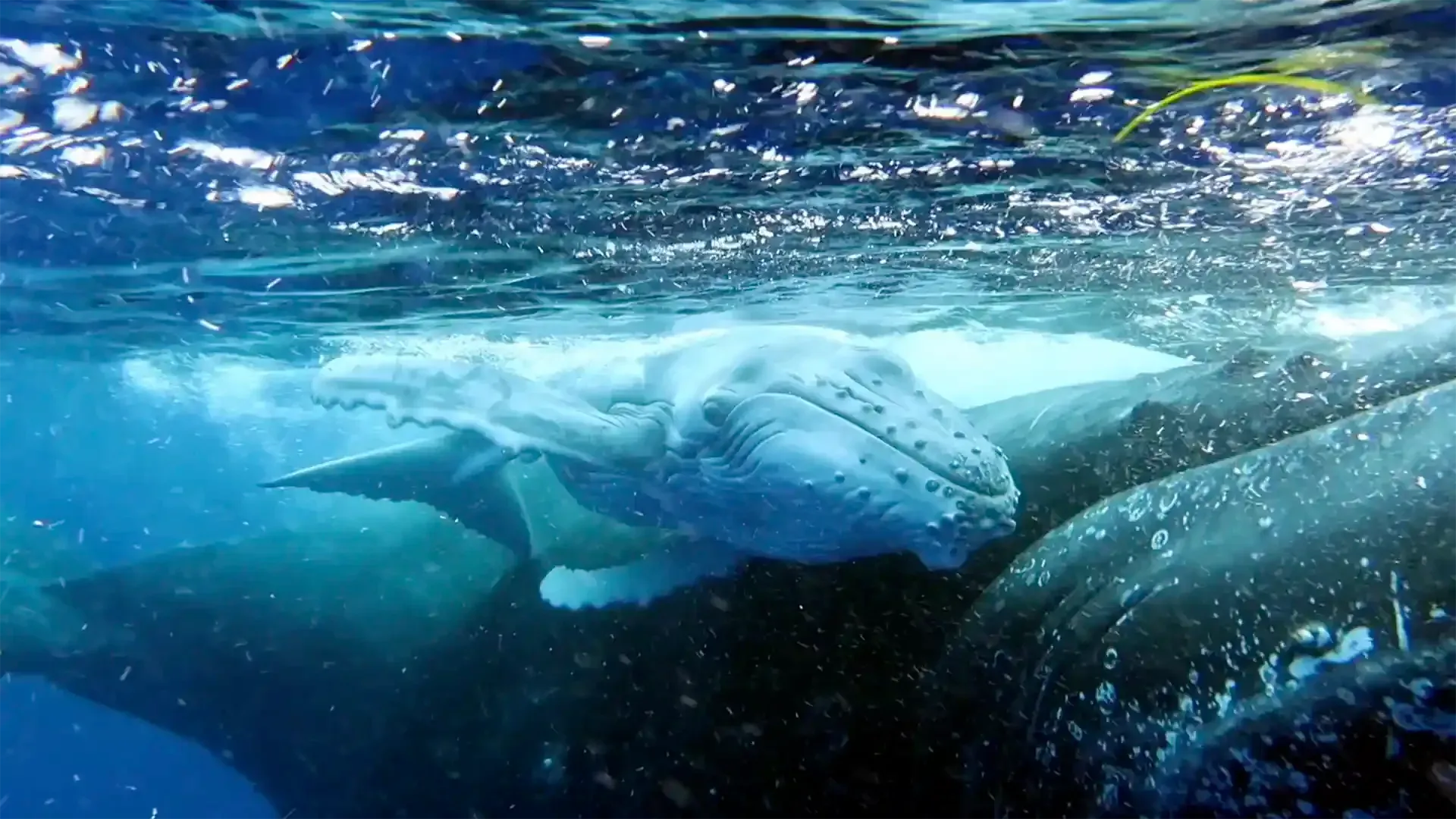
Humpback calves are born tail-first. It sounds like a complication, but for a mammal giving birth underwater it is exactly the right way around, it means the calf’s head emerges last, so there is no risk of it trying to take a breath while still submerged. Within moments of being born, the mother nudges her newborn to the surface for its very first breath of air.
Newborns are not small. A humpback calf arrives at around four to five metres long and weighing close to a tonne. Alongside a fully grown mother of 15 metres or more and over 30 tonnes, they still look tiny, but that calf is already longer than most cars.
What Is Whale Milk Like?
This is the fact that stops people mid-sentence on the boat. Humpback milk is somewhere between 45 and 60 per cent fat. For comparison, human milk is around 2 per cent. Whale milk is so rich it has the consistency of yoghurt or even toothpaste, which matters enormously underwater, thin milk would disperse into the ocean before the calf could take it in.
A calf can drink up to 600 litres of that milk a day. It puts on as much as 45 kilograms a day and can grow roughly a metre a month in those early weeks. Calves nurse for somewhere between six and ten months before becoming independent.
Here is the part that makes it remarkable: humpback mothers do almost all of this while fasting. They do very little feeding on the breeding grounds or during the migration, living off the blubber reserves built up in Antarctica while producing hundreds of litres of milk a day. By the time she gets her calf south, a mother may have lost a substantial share of her body weight.
Why Do Humpback Mothers and Calves Whisper?
Humpback whales are famous for their songs, which can carry for many kilometres through the ocean. Mothers and calves do the opposite. Researchers have found that mother and calf pairs communicate using extremely quiet grunts and squeaks, roughly 40 decibels softer than a singing humpback.
They are whispering on purpose. Loud calls would carry across open water and advertise the pair’s position to killer whales hunting calves, and to male humpbacks looking to escort the mother. By keeping their voices down, the pair stay in contact without announcing themselves to everything else in the ocean. Most of that whispering happens during dives, when mother and calf are further apart and need to stay in touch.
What Does a Calf Learn in Its First Year?
Almost everything. A calf born in winter has only a few months to learn to breathe in rhythm, dive, keep pace with its mother and build the strength for a migration of thousands of kilometres before its first birthday.
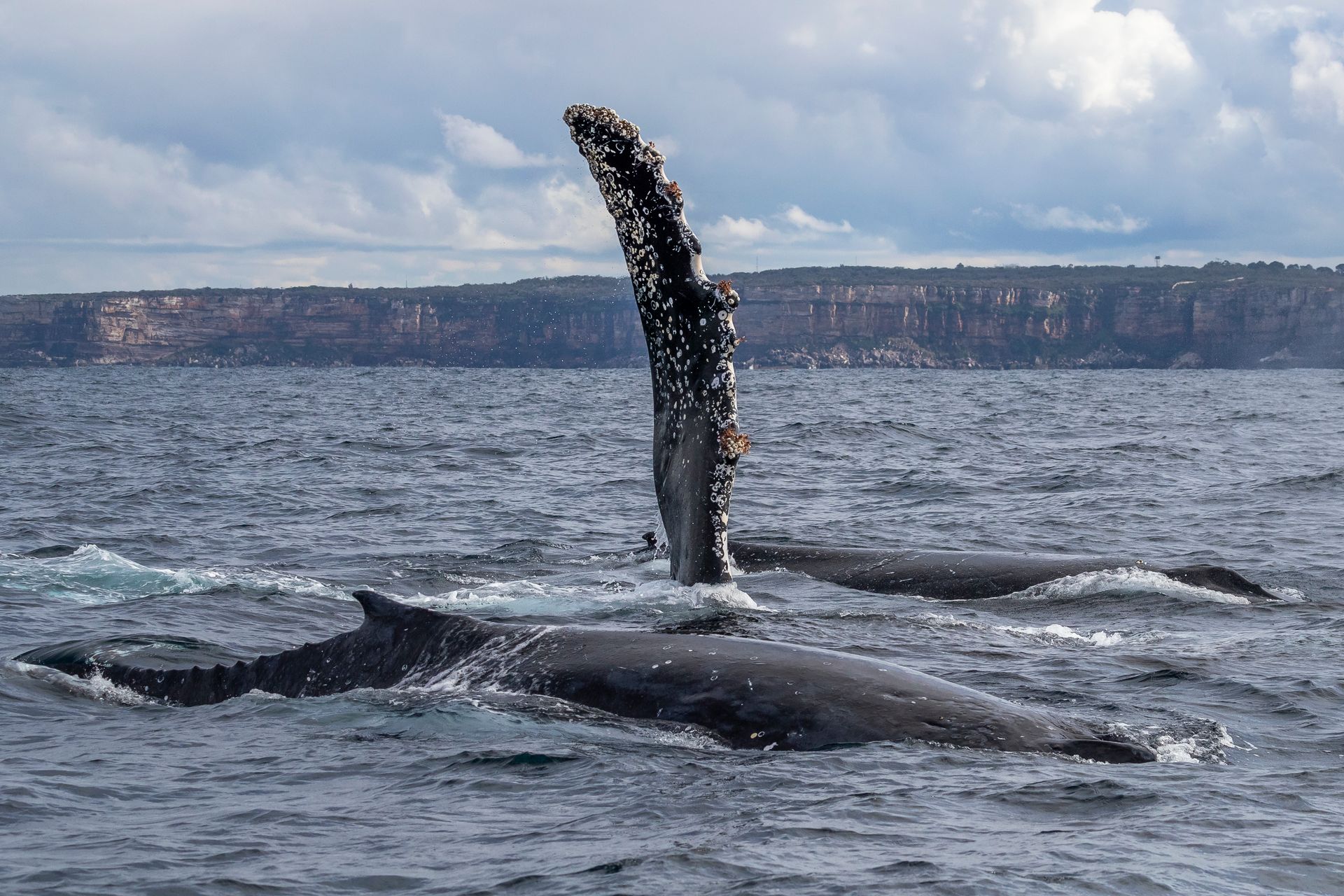
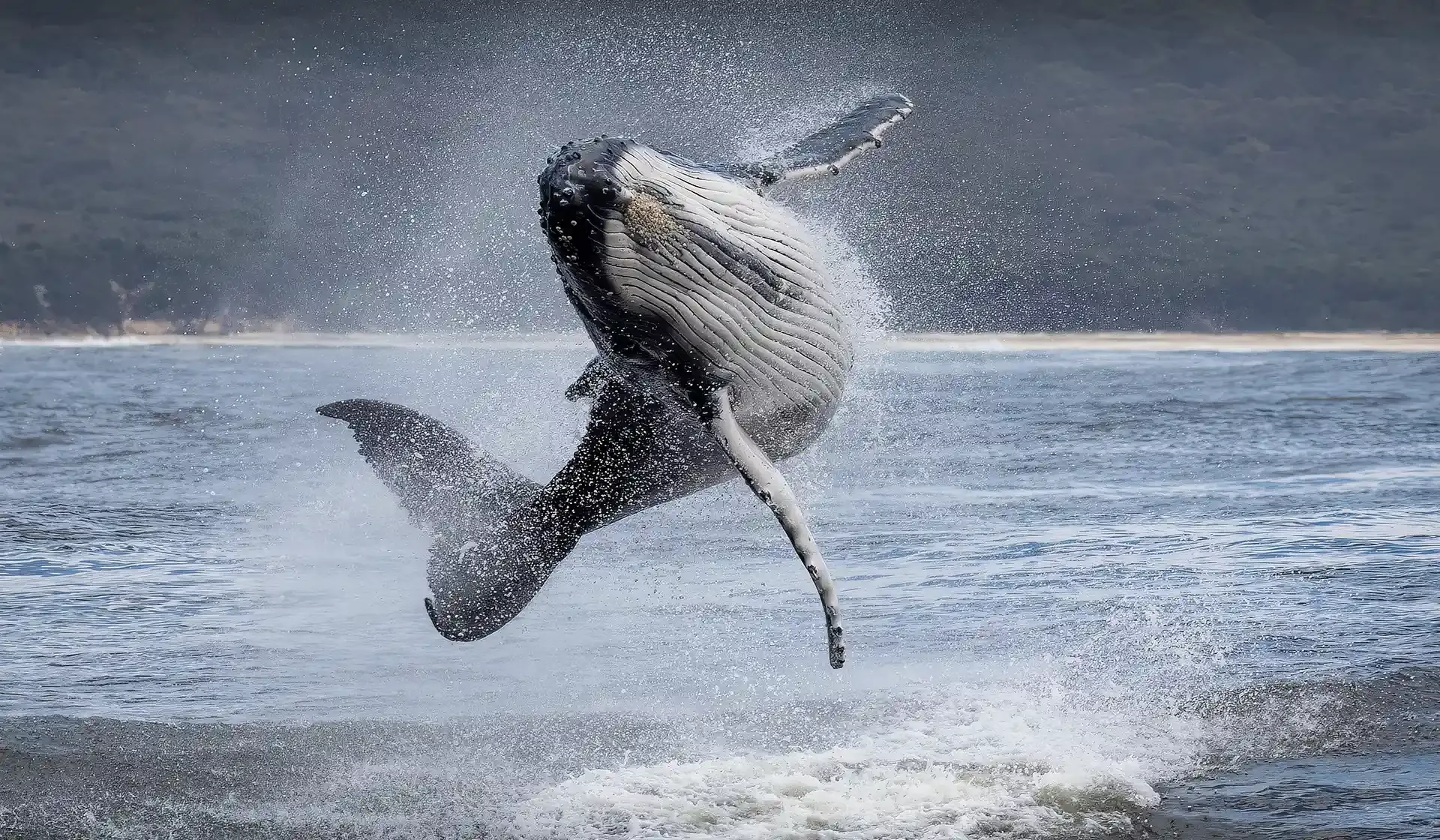
That is why spring cruises are so entertaining. The rolling, the clumsy pectoral slaps, the half-finished breaches that land sideways, those are not just play. They are a young whale practising the skills it will need for the rest of its life, and getting it wrong in public while it learns.
Where Can You See Mothers and Calves Near Sydney?
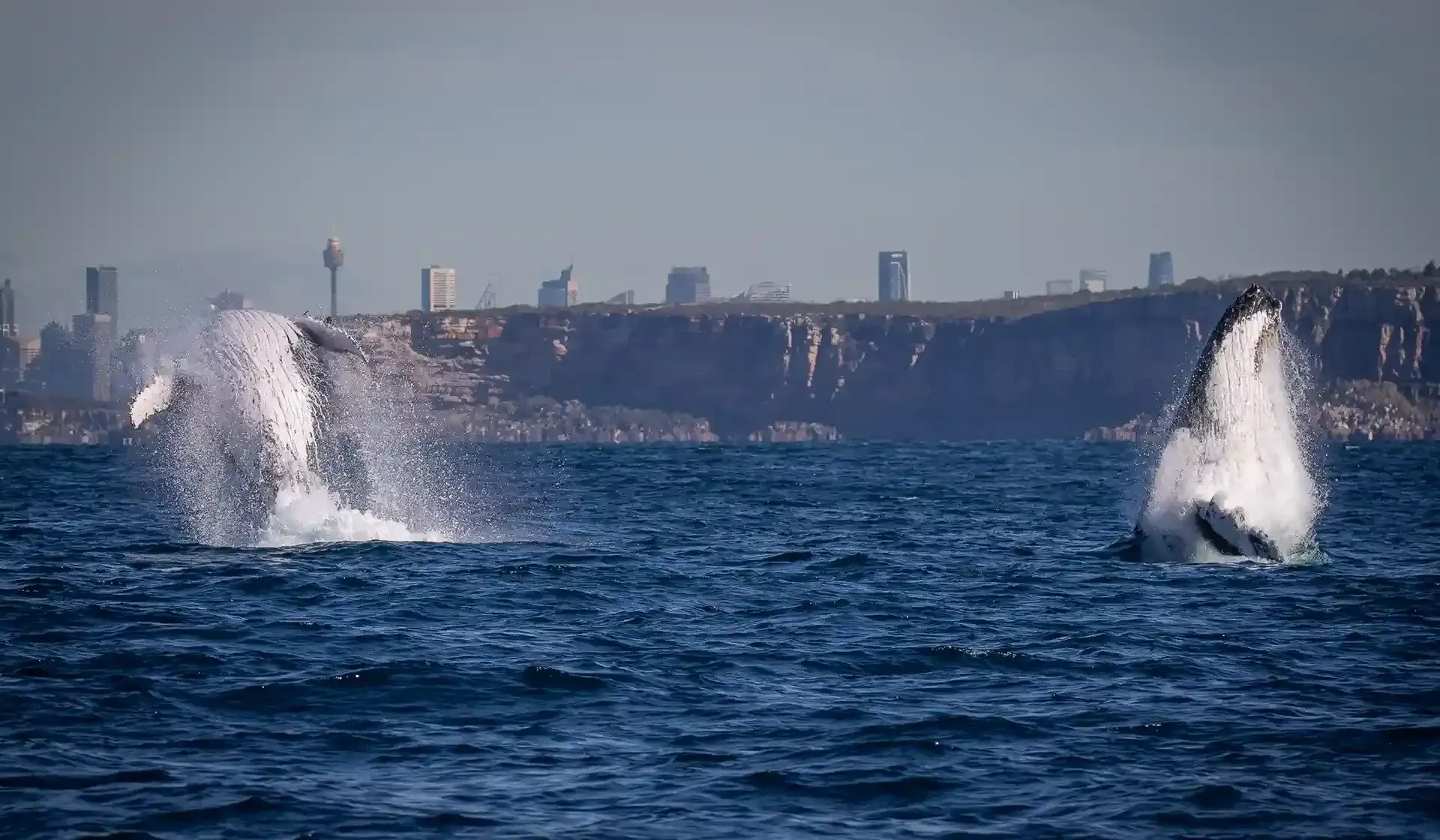
Sydney sits directly beside the migration route, which makes whale watching Sydney one of the easiest places in the world to see this for yourself. You leave Darling Harbour, cruise out past the Opera House and the Harbour Bridge, pass through the Heads and within minutes you are on the open Pacific alongside the whales.
The southbound migration runs from around August through to November, and the later part of the season is when mothers and calves come through. They tend to travel more slowly than the rest of the migration and often hug the coastline, which is exactly why spring delivers some of the best whale watching Sydney has to offer. Our crew have seen calves breach beside the boat more times this season than we can count.
Once you know what a mother and calf have already been through to get there, seeing them together off Sydney lands very differently. It stops being a nice photo and becomes something closer to witnessing the end of an extraordinary first chapter.
There is still plenty of season ahead, and the calves are out there right now learning as they go. We would love to show you.
See you on the water!
Captain Simon
