

G’day whale lovers,
Spring has arrived in Sydney and, just beyond the beaches, one of the most fascinating wildlife events on any urban coastline is getting underway. The humpback whales are heading south. After travelling north earlier in the year to the warmer waters where they breed and give birth, they are now beginning the long trip back towards their feeding grounds in Antarctica. The southbound migration generally runs from around August through to November, with increasing numbers of whales passing Sydney as spring progresses.
For anyone heading out on a whale watching cruise this season, it is an exciting time to be on the ocean. Once you know a little more about what you are seeing, an encounter with a humpback becomes even more remarkable. So as the southern migration gets underway, here are a few things to look for on your next trip.
The Blow: Where Every Whale Search Begins
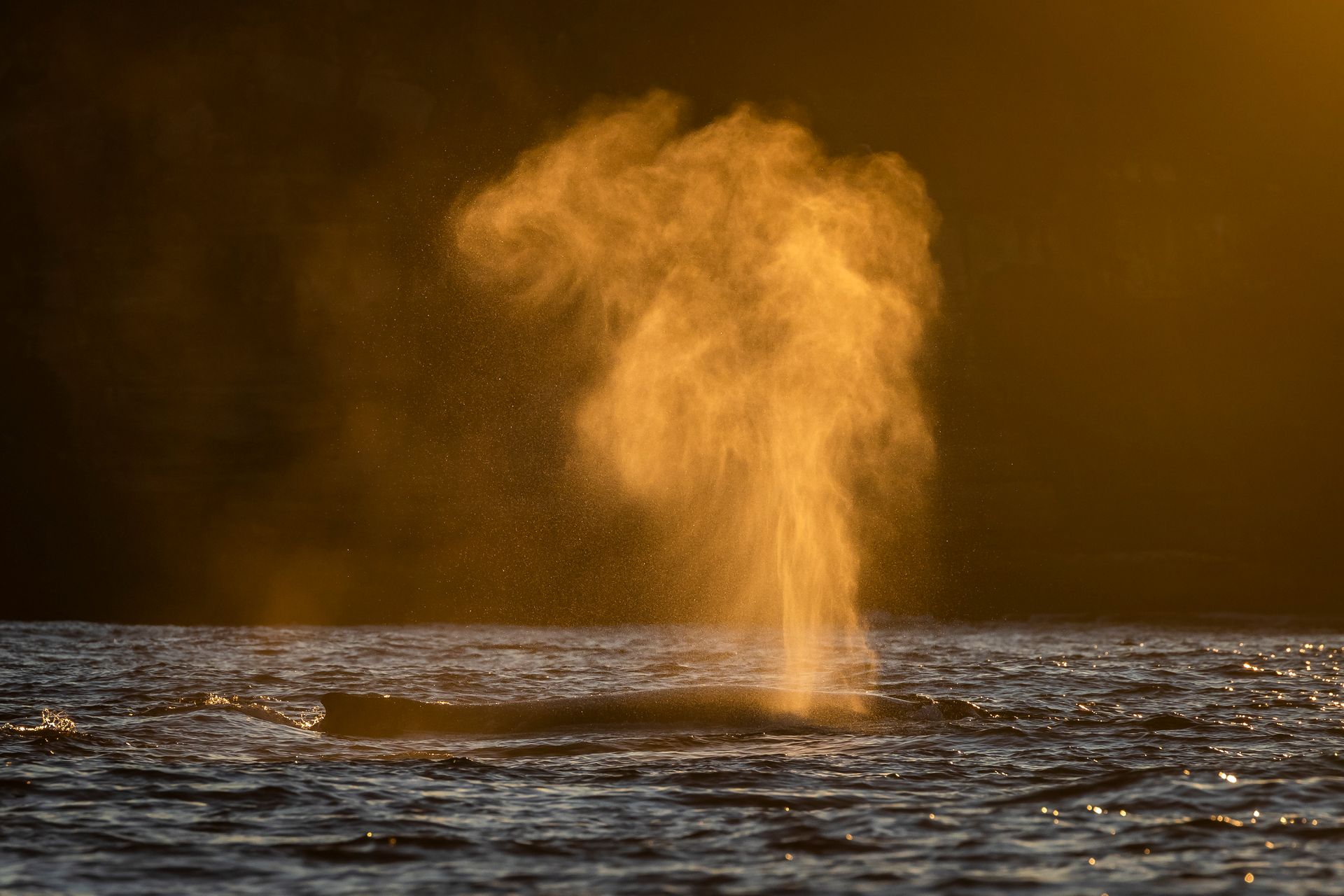
Before the spectacle of a breach, a rising tail or an enormous splash, there is often a much smaller clue: a tiny puff of spray appearing on the horizon. Whales breathe through blowholes on top of their heads, exhaling forcefully as they reach the surface, and from a distance that burst of air and moisture creates a visible plume above the ocean.
For a crew scanning Sydney’s coastline, spotting a blow is very often the first clue that whales are nearby. Once you have seen one, keep watching. Another breath may follow, then the curve of a back or the flash of a dorsal fin, until that tiny puff on the horizon becomes a full humpback whale encounter.
That Tail Tells You Something
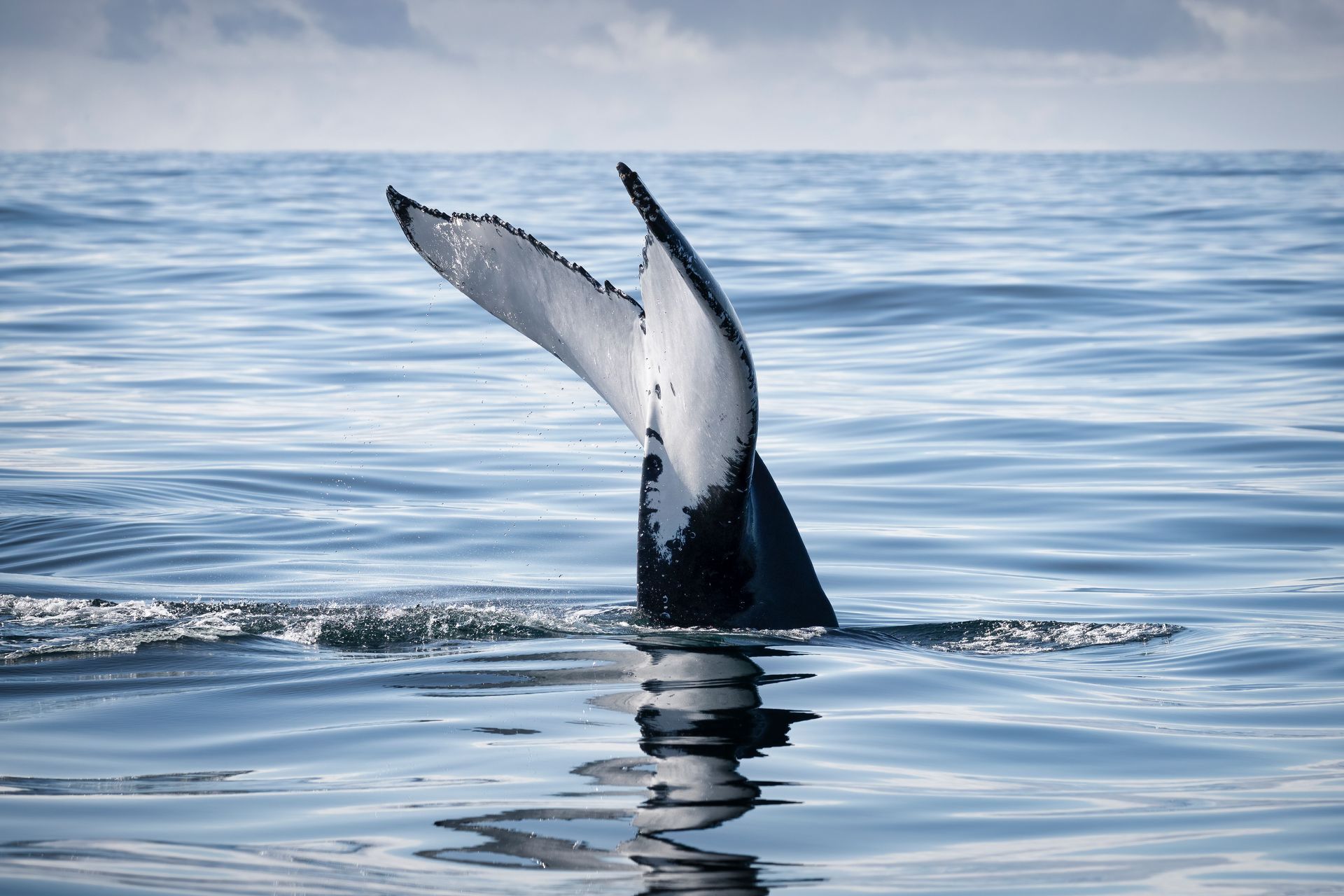
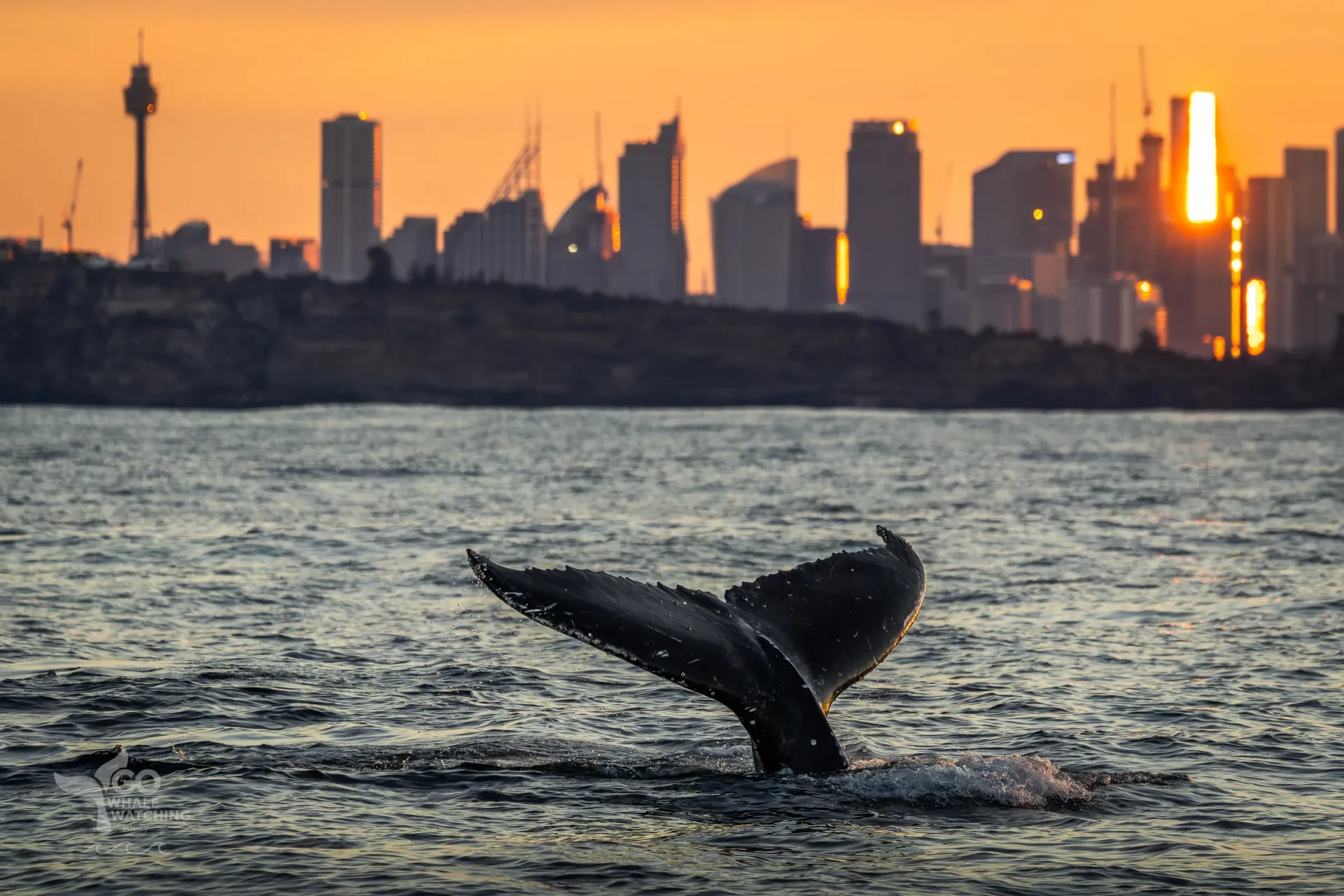
One of the most recognisable sights on a whale watching trip is a humpback lifting its tail high above the surface before disappearing underwater. This is known as a fluke-up dive, and it usually means the whale is preparing to make a deeper dive.
Humpbacks have distinctive black and white markings on the underside of their tail flukes, and those patterns are unique to each individual whale. Researchers use photographs of these markings to identify whales and track where they travel over time. So when you are taking photos from the boat, do not only look for the spectacular moments — a clear photograph of a whale’s tail can be surprisingly valuable for the scientists studying the population.
Why Do Whales Slap Their Fins?
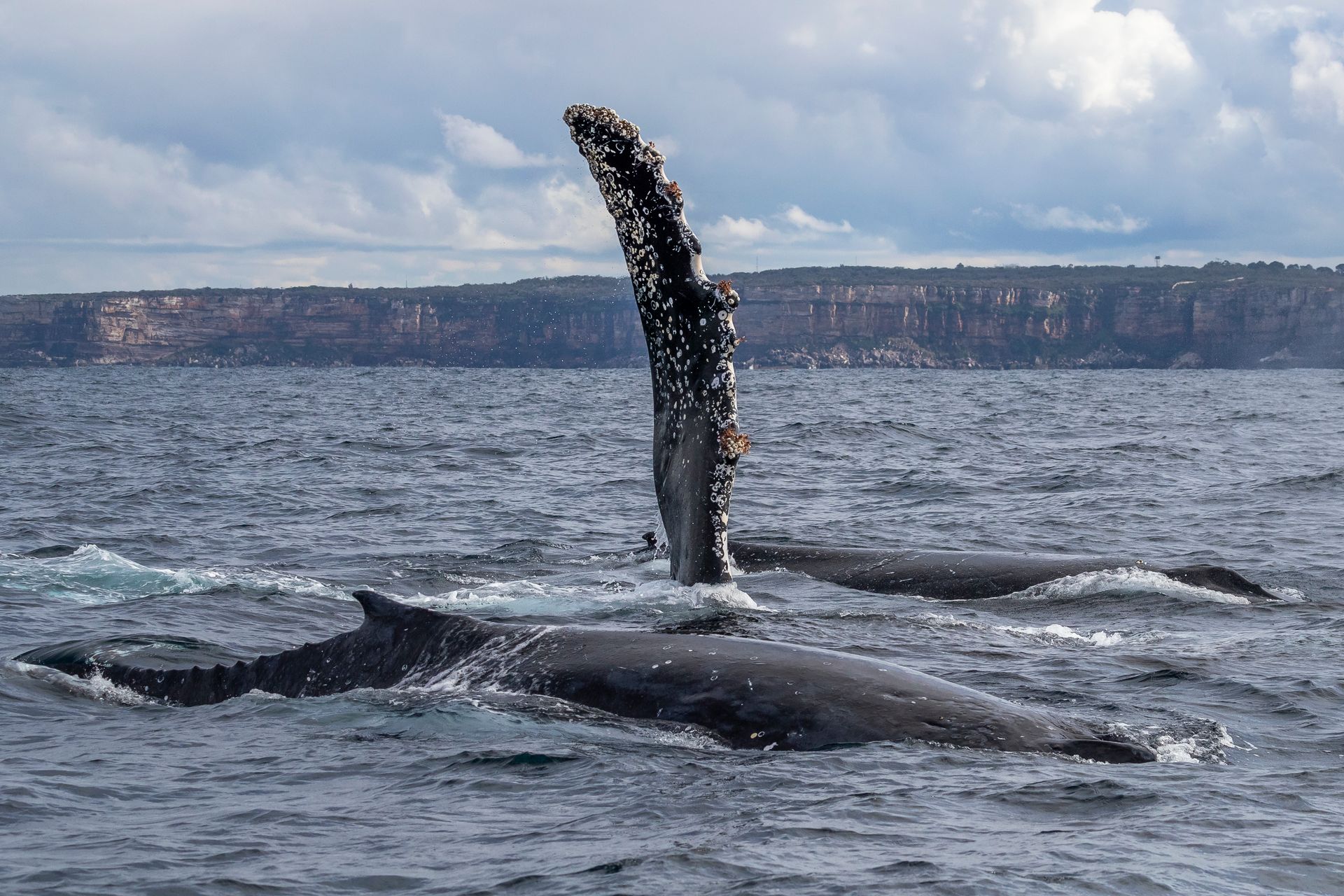
Every now and then a humpback will roll onto its side and bring one enormous pectoral fin crashing down onto the surface. Those fins are remarkably long, reaching around a third of the whale’s body length, and watching one sweep through the water gives you a real sense of just how enormous these animals are. Scientists believe surface behaviours such as pectoral slapping, breaching and tail slapping may serve several different purposes, including communication, social interaction or even shifting par
Spring Brings the Calves South
One of the most special sights during the southbound migration is a mother travelling with her calf. Humpback calves are born in the warmer northern waters because they do not yet have the thick layer of blubber needed to cope with the much colder Antarctic environment.
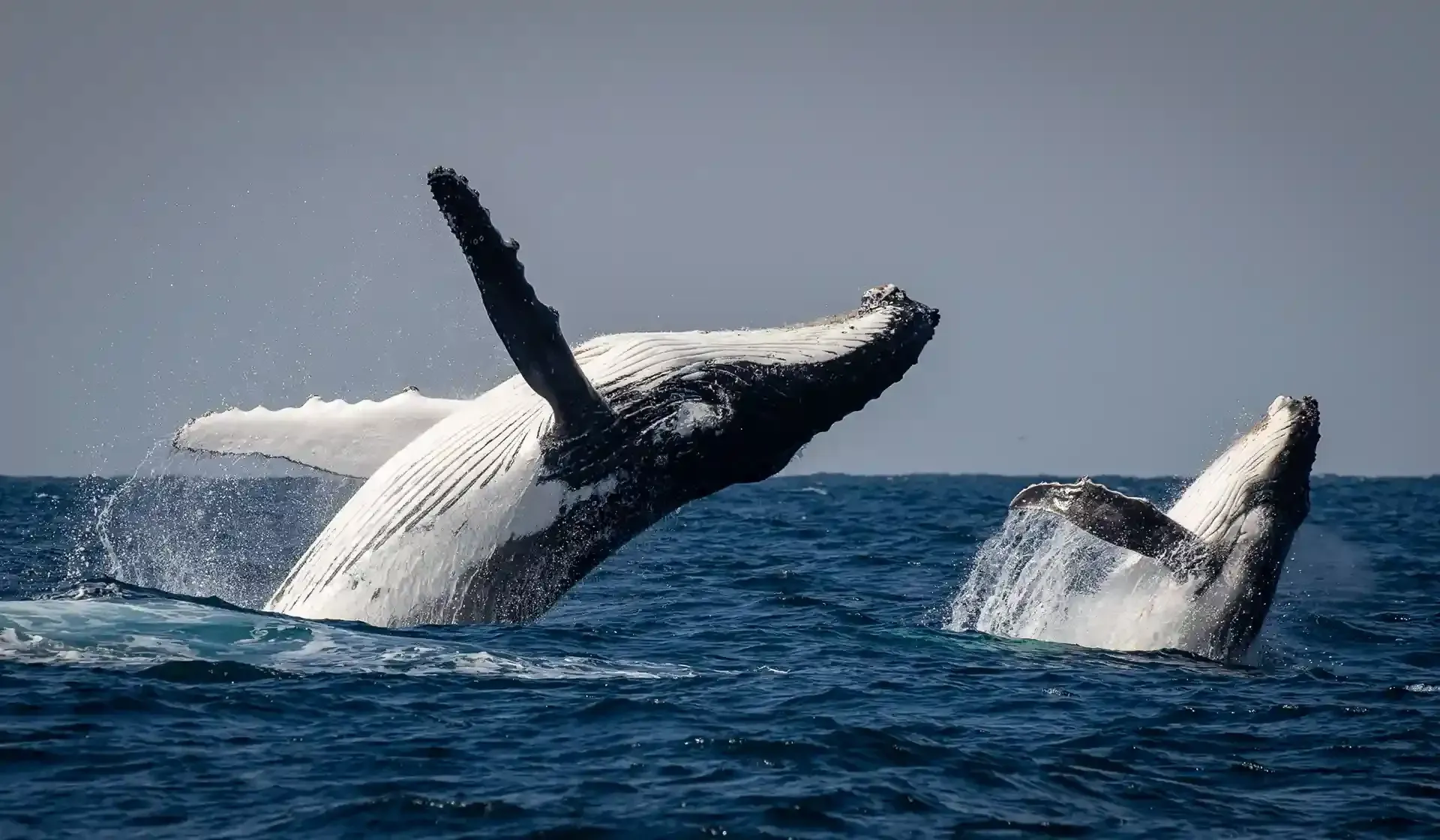
Through spring you may see calves surfacing alongside their mothers, rolling at the surface or beginning to practise some of the behaviours they will rely on as they grow. They can breach, slap their pectoral fins against the water and spend plenty of time playing at the surface. For these young whales the journey south is their first major migration, and watching them make it alongside their mothers is a lovely reminder of just how much they have to learn in their first year.
So Why Are They Heading South?
The annual migration is closely tied to the whales’ need to feed and to breed. Humpbacks spend the warmer months feeding in the productive waters around Antarctica, where food is plentiful. As winter approaches they travel north into warmer tropical and subtropical waters to breed and give birth. Calves are born in those warmer waters, where they can build up strength and learn to swim alongside their mothers before the journey south begins again.
By the time the whales reach Sydney on the southern migration, many are heading back towards those productive feeding grounds. When you see a humpback travelling south, you are seeing one small part of a journey that spans thousands of kilometres and takes place across an entire year.
Why Sydney Is Such a Special Place to Watch
Sydney offers a genuine front-row seat to the annual humpback migration. Leave the harbour behind, pass through the Heads and within minutes you are out on the open Pacific Ocean, right alongside the whales’ migration route. From August to November, a Sydney whale watching cruise brings sightings of humpbacks travelling south, resting at the surface, moving with calves or interacting with one another. You might witness a breach, spot a mother and calf, or simply watch a series of blows tracking across the horizon. With the city behind you and the open ocean ahead, it is one of the best places anywhere to experience the migration.
Spring Whale Watching Is Back
Spring is the perfect time to get back out on the water and see the migration for yourself, and now you know what to look for you can start to understand a little more about the animals moving through the ocean around us. Keep an eye out for the blows, watch for those distinctive tails and look closely for calves travelling beside their mothers. Once you start paying attention to the details, whale watching becomes about more than simply spotting a whale — it becomes about understanding what you are seeing, and that is what makes every trip different.
See you on board!
Captain Simon
