

Welcome aboard,
Out on the water, a whale’s presence is usually marked by a spout of mist, a fluke (tail), or if you’re lucky, a dramatic breach. But beneath the surface, a world of sound and communication is unfolding. Humpback whales are known for their long, complex, and ever-changing songs, creating one of the most complex soundscapes in the natural world.
The humpback whale song
Every year during migration, male humpback whales produce a series of sounds known as the humpback whale song. These songs are made up of repeating “phrases” and “themes,” organised into a distinct structure. They can last for up to 30 minutes and are often repeated in cycles for hours at a time with a chorus of moans, squeaks, groans and pulses.
Generally, you cannot hear whale song above the water. Humpback whale songs are mostly low-frequency vocalisations that travel extremely well through water, but not through air. Underwater, a humpback whale’s song can travel vast distances, sometimes hundreds of kilometres.
Do all humpback whales sing?
Only male humpbacks sing, and they do so primarily during the breeding season. Scientists believe the main purpose of the song is to attract mates, but it may also serve to establish presence among rival males or help with spatial awareness in breeding areas.
Incredibly, every male in the same population sings the same song, and that song changes gradually over time. On Australia’s east coast, humpbacks sing one song for a season, then slowly adopt variations, sometimes incorporating completely new sounds from other populations. This form of cultural transmission is rare in the animal kingdom and suggests a social learning system among whales that’s still being studied.
You can listen to recordings of East Australian humpback whales at
The Oceania Project.
Other ways whales communicate
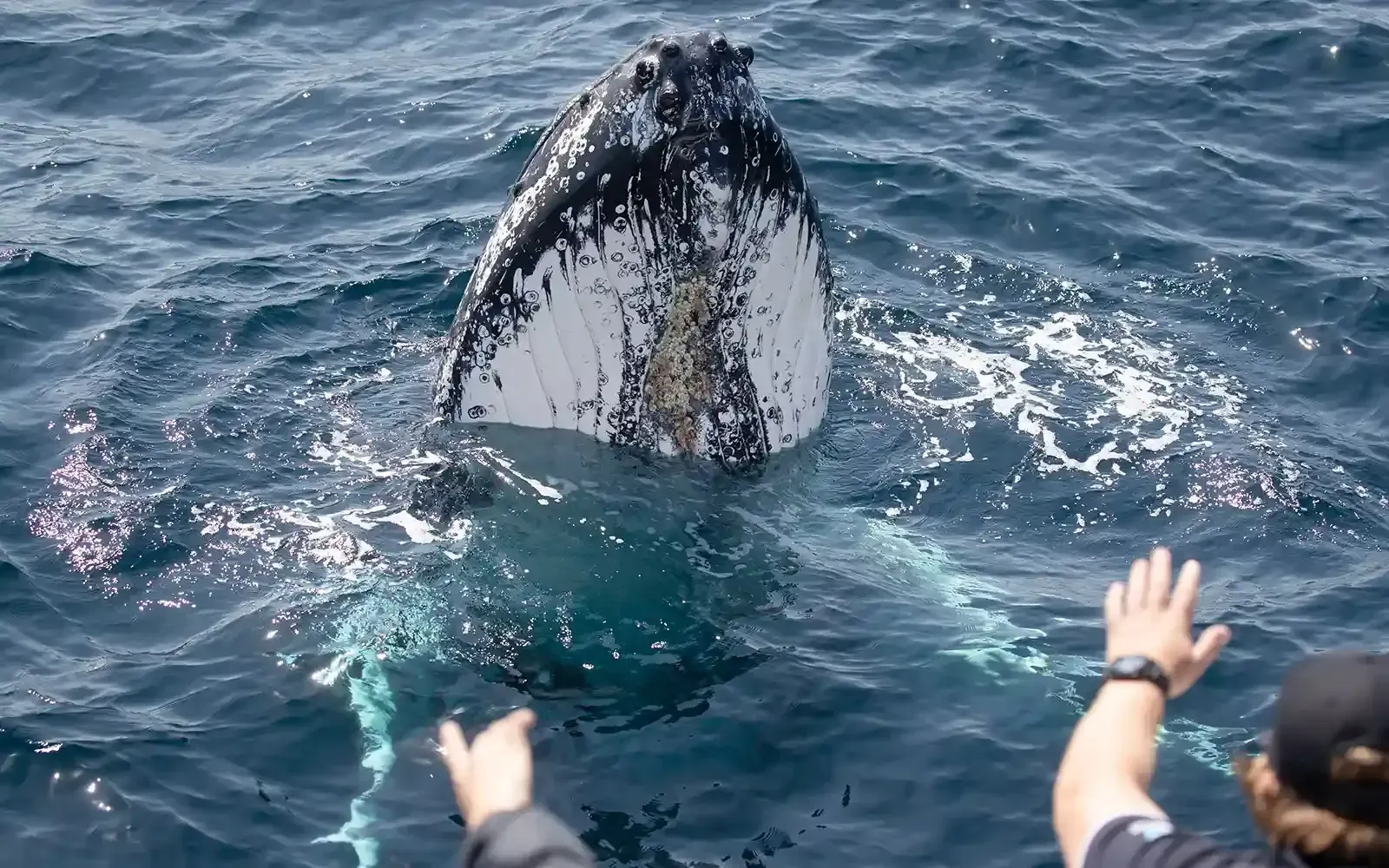
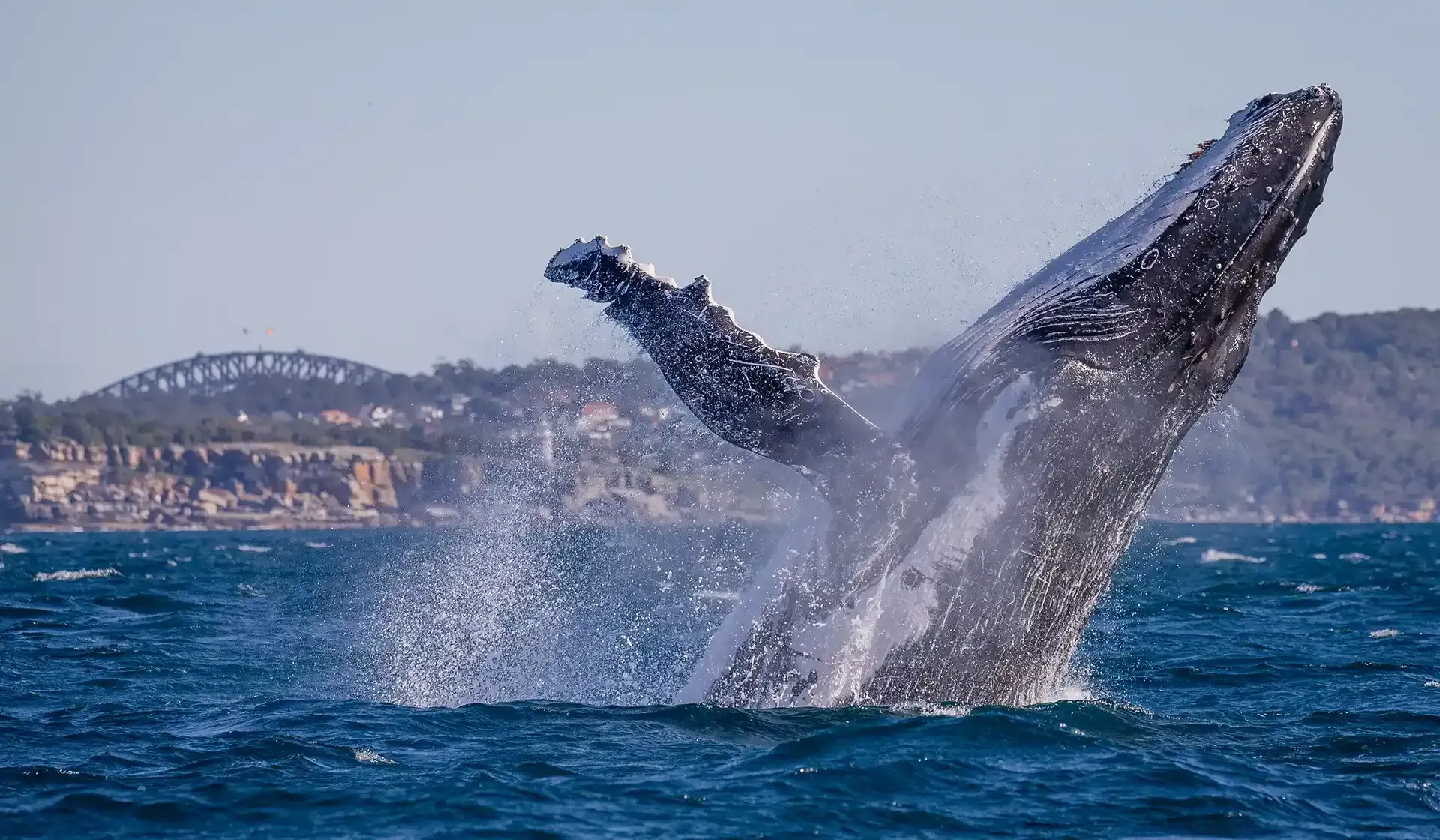
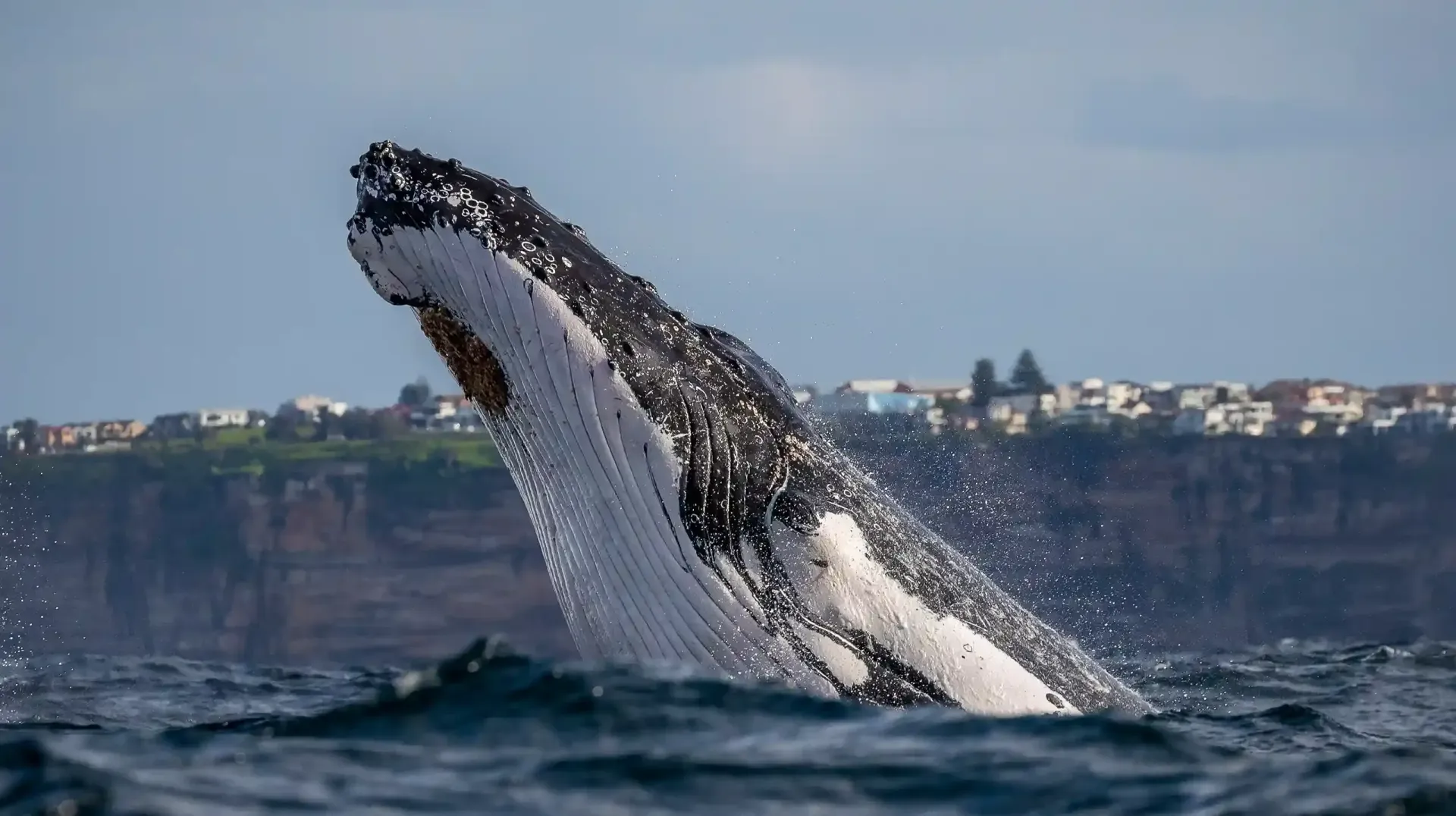
While singing is mostly a male behaviour, both male and female humpbacks use other forms of communication. Tail slaps, pectoral fin waves, breaches and head lunges are all communication signals that can be used to alert, warn, or interact with other whales.
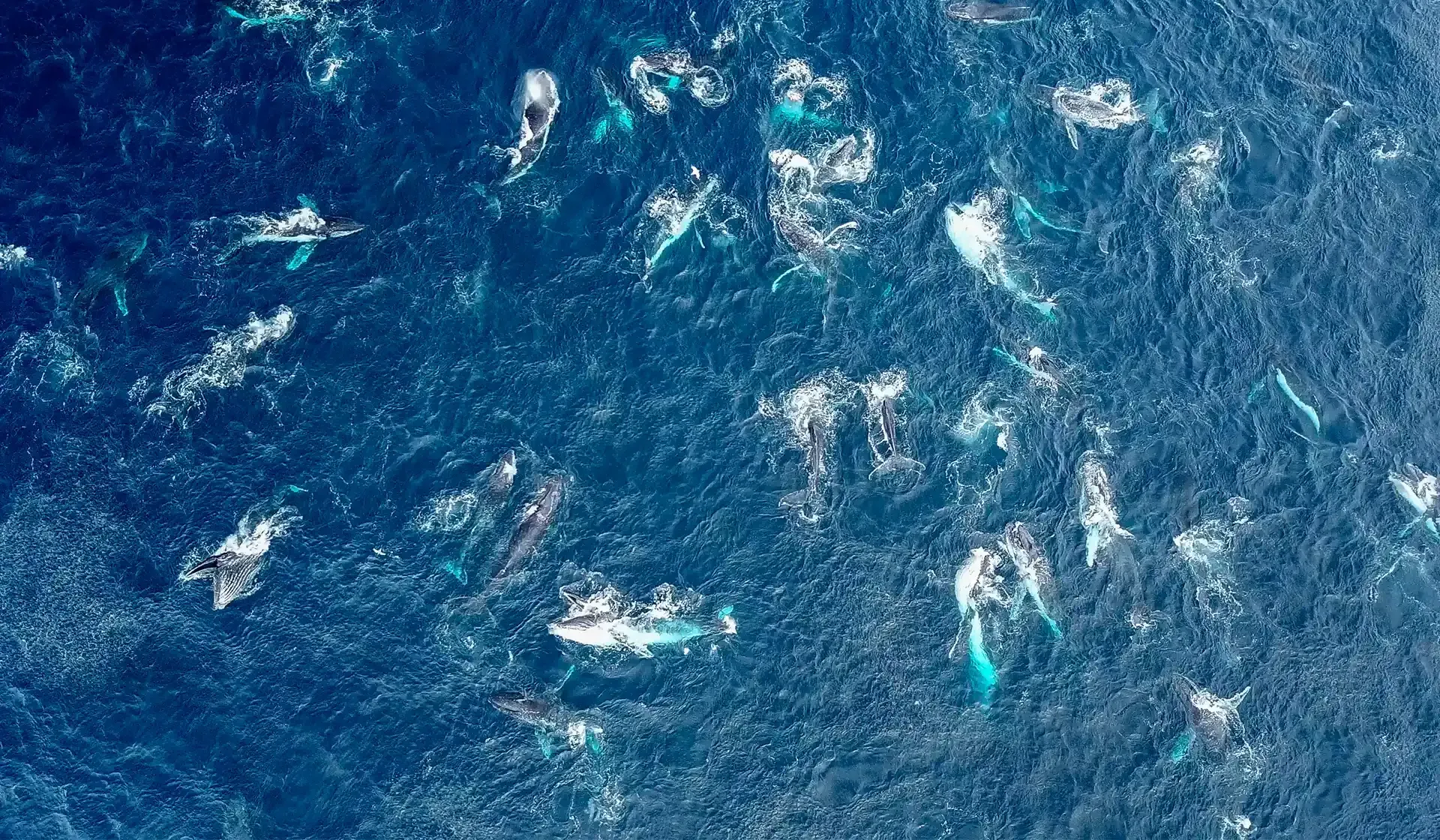
Humpbacks also use low-frequency vocalisations, different from their structured song, for more practical, day-to-day communication, like helping mothers and calves stay connected or coordinating feeding in colder southern waters.
Why noise pollution matters
Because whales rely heavily on sound to communicate, navigate and feed, they’re especially vulnerable to noise pollution. Human activity like increased shipping traffic, underwater drilling and naval sonar have all added layers of human-made noise to the ocean, which can interfere with whale communication.
Protecting whales means protecting the acoustic environment they live in. At Go Whale Watching Sydney, we maintain safe distances, minimise engine noise, and avoid sudden changes in vessel direction or speed to ensure we never interfere with a whale’s natural behaviour, including communication.
See humpback whales in the wild
Although whale song usually isn’t audible from a whale boat, humpbacks remind us that there’s more going on beneath the surface than we can ever fully understand. If you want to experience the best whale watching in Sydney, we would love for you to join us on a whale watching cruise. Our tours operate from May to November each year during the migration season, departing Darling Harbour.
In the current,
Captain Simon